
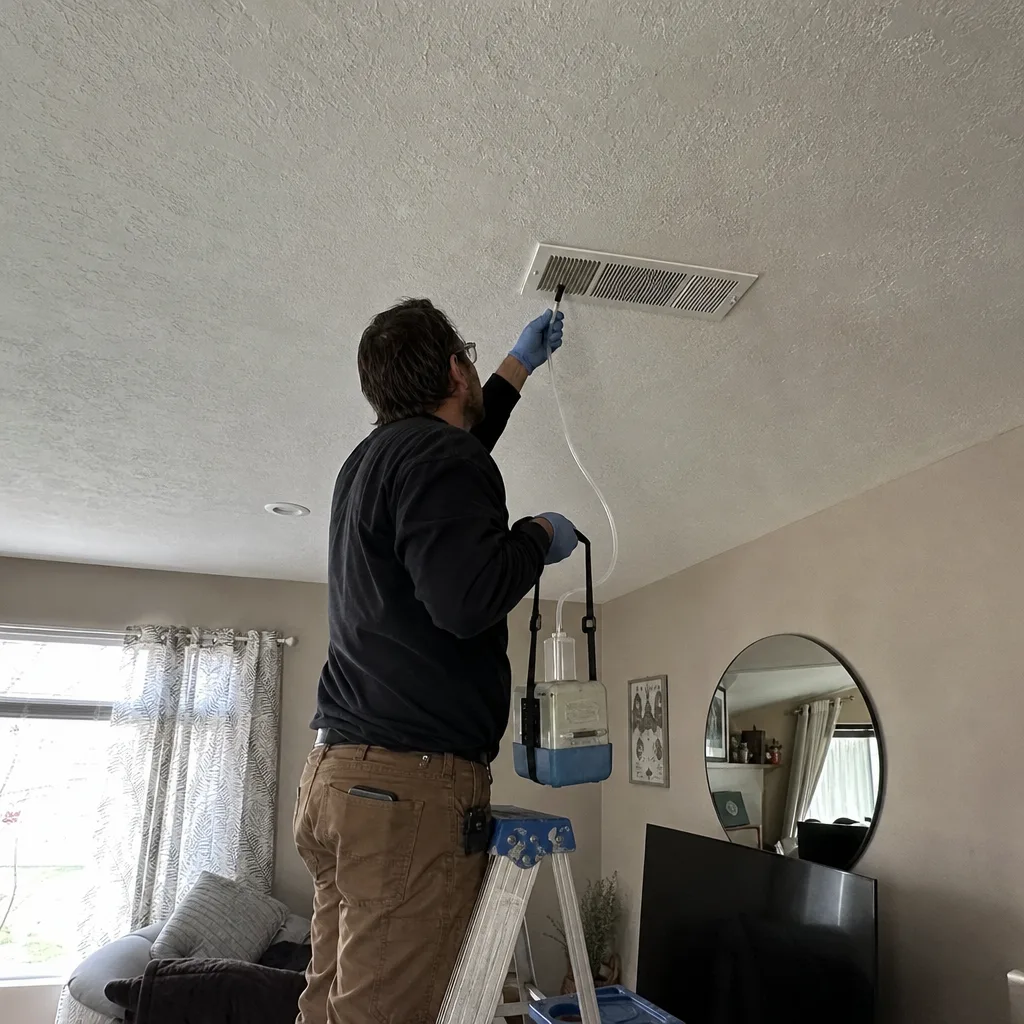
Last updated November 24, 2026
 Whole-home duct cleaning
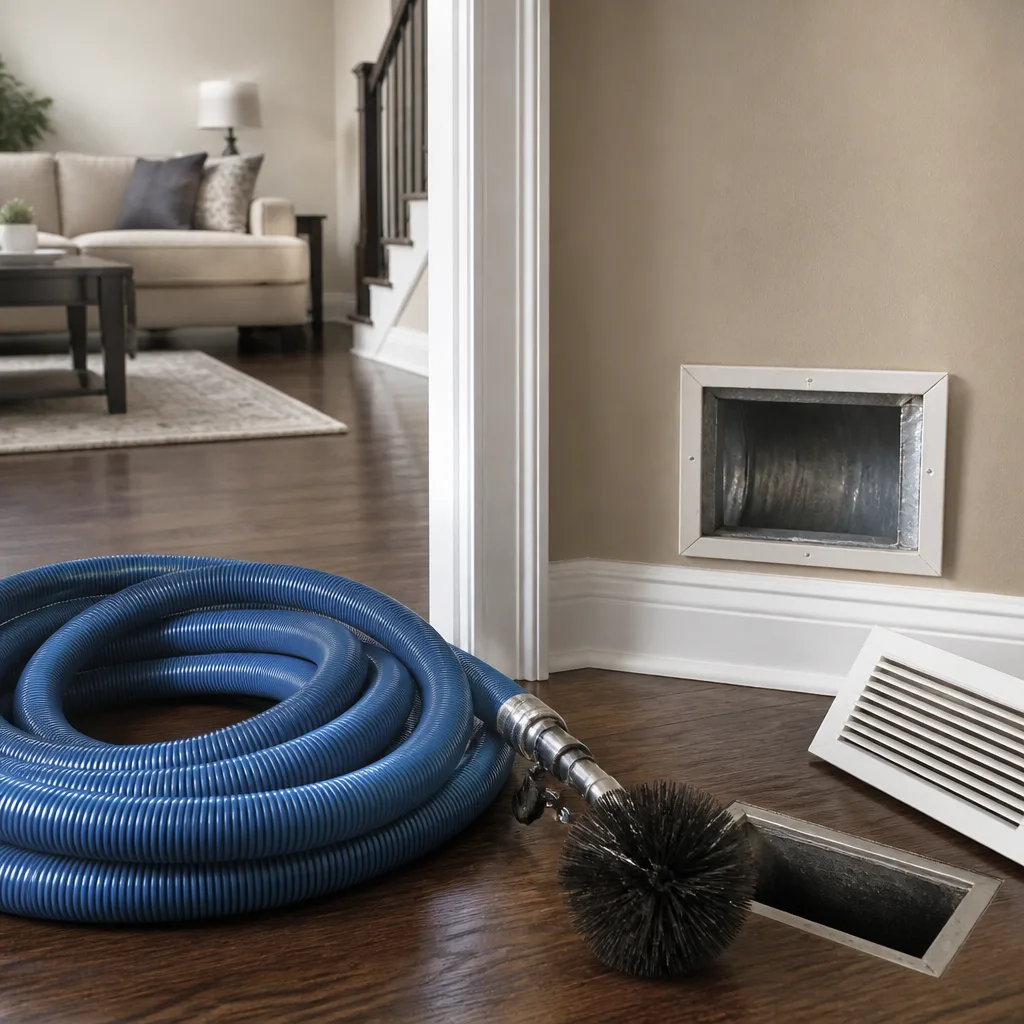
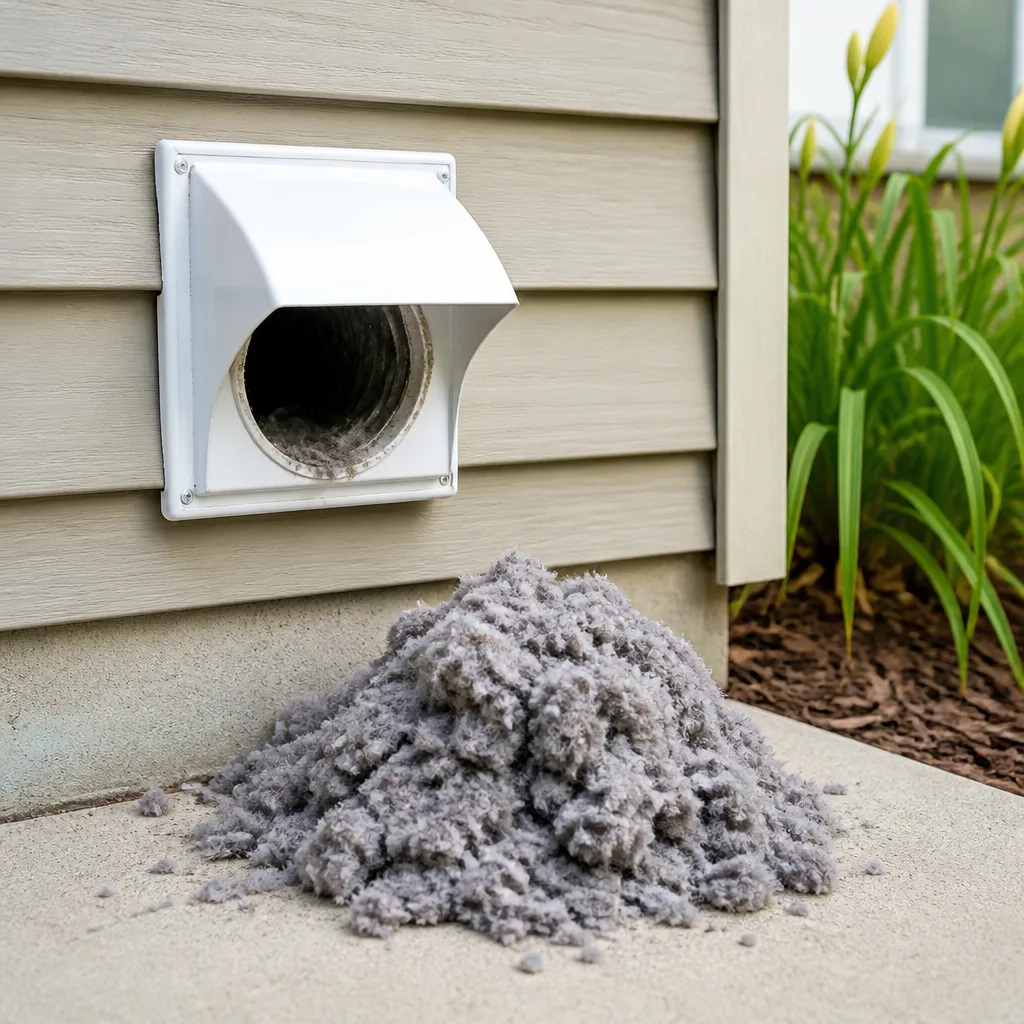 Dryer vent cleaning
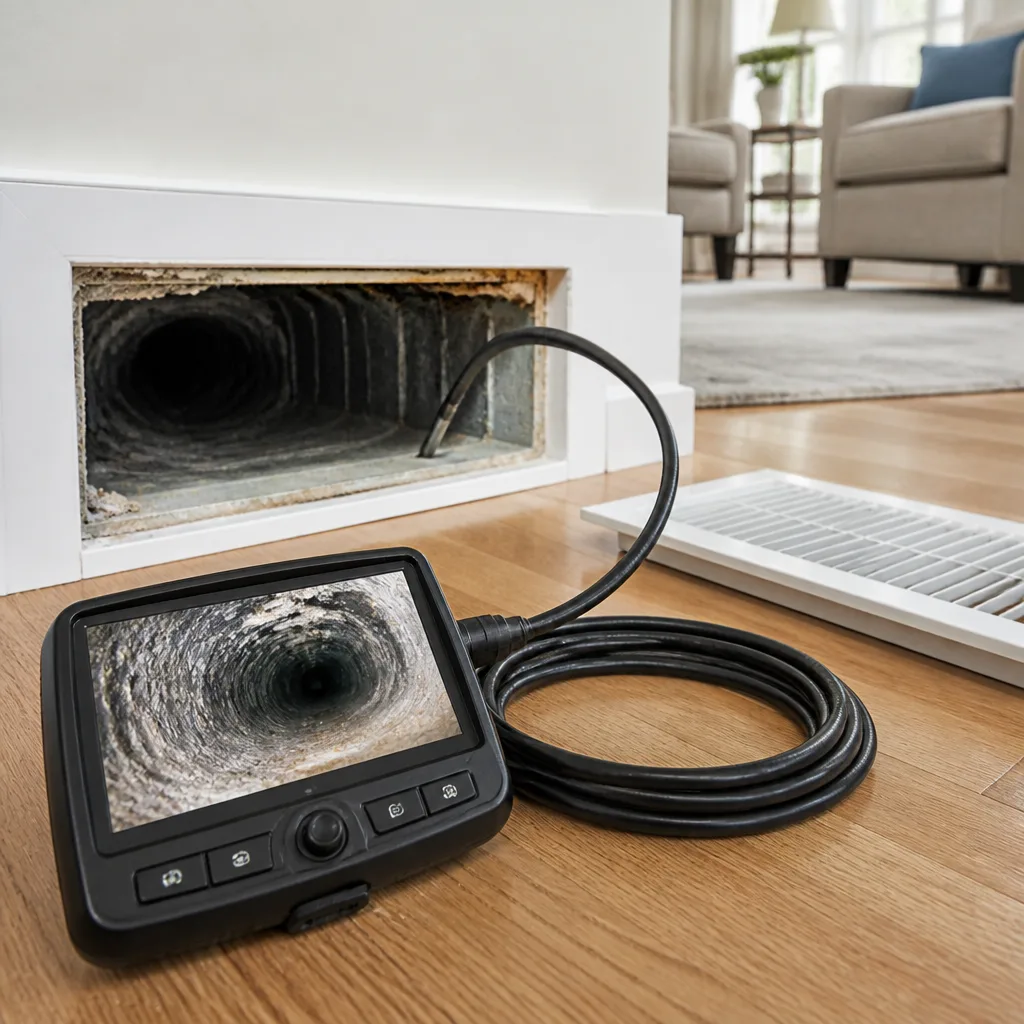 Camera inspection
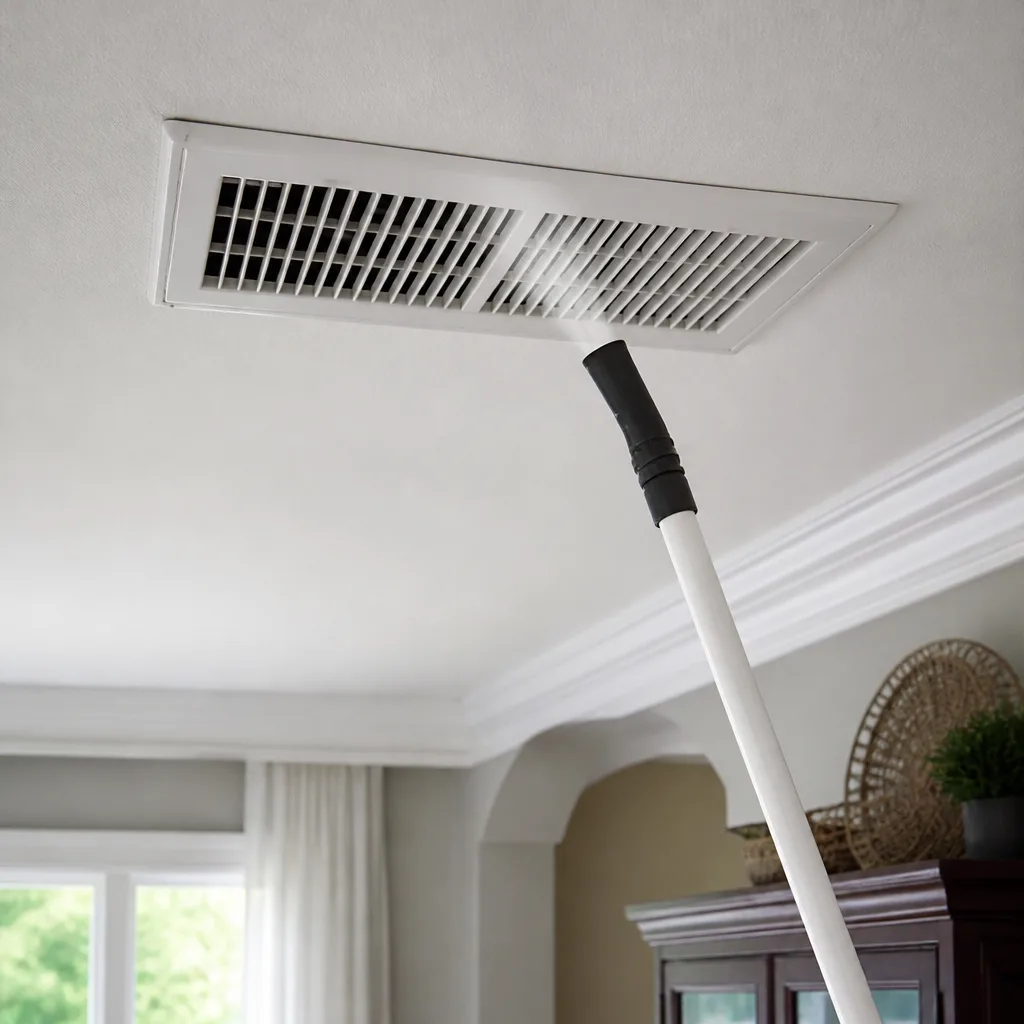 Sanitizing & deodorizing
Whole-system duct and dryer vent check with before-and-after photos - you see exactly what came out of your vents
That "$99 whole-house special" is a bait ad - the real number appears once they are in your hallway, or the "clean" is a shop-vac at the register. We photograph the inside of your ducts before and after instead.
DIY vs Professional Air Duct Cleaning: The West Jordan Homeowner’s Decision Guide
Most homeowners assume the only difference between a hardware store duct kit and a professional service is power. More suction, cleaner ducts, done. That’s not quite it. The real dividing line is pressure. A shop vac generates roughly 100 CFM of suction. A truck-mounted professional unit generates 10,000 to 16,000 CFM. That’s not a marginal difference in cleaning quality – it’s a different physical process entirely. One lifts dust. The other evacuates a system. Understanding the gap tells you exactly what you can reasonably do in your own West Jordan home and where your effort stops being useful. This guide lays out both sides honestly.
Quick Answer
You can legitimately handle register cleaning, return grille washing, dryer vent inspection, and filter maintenance yourself between professional cycles. What you cannot do with consumer equipment is true source-removal cleaning of the duct system itself, because shop vacs and consumer kits cannot generate the negative pressure required to pull settled debris out of trunk lines and branch runs without pushing it deeper into the system or through the living space. Professional cleaning exists because the physics of source removal require equipment that costs more than the job.
Styles & brands we work with
- Whole-home duct cleaning
- Dryer vent cleaning
- Camera inspection
- Sanitizing & deodorizing
Table of Contents
- Why duct cleaning is a pressure problem, not a brush problem
- What you can legitimately do yourself in West Jordan
- The consumer equipment reality check
- When DIY makes contamination worse
- When professional service is non-negotiable
- The hybrid approach: DIY between professional cycles
- Why West Jordan’s climate and housing shape the decision
- How to evaluate a professional quote before you commit
Why duct cleaning is a pressure problem, not a brush problem
Air duct cleaning is fundamentally about moving air with negative pressure so that settled debris lifts out of the system and gets captured before it re-enters your living space. A technician attaches a high-volume vacuum to the main trunk and creates a pressure differential – the whole duct system pulls toward a single collection point. Rotobrush and Nikro systems are built around this principle. The brush or air whip disturbs debris loose, and the vacuum captures it while it’s airborne.
Consumer equipment cannot create that differential. A shop vac pulls around 100 CFM at the hose end and drops to almost nothing the moment you attach a long duct run. The fan is inside the living space, not outside at the trunk. As you push a brush into a branch run, the debris you loosen has nowhere to go except back into the room. You end up agitating settle-able dust into breathable air.
This is the difference between surface maintenance and source removal. Surface maintenance lifts the visible dust sitting on register blades and grille faces. Source removal evacuates the settled layer attached to the walls of the trunk and branch lines, which is where the biological growth, debris accumulations, and microbial load actually live. On a typical West Jordan home with a central forced-air system and standard flex or rigid ductwork, that settled layer is often the whole problem – and it’s the part consumer tools can’t reach.
We’ve watched the industry sell homeowners on the idea that a cleaning is a cleaning. It isn’t. Professional-grade equipment, not consumer shortcuts, is the actual dividing line.
What you can legitimately do yourself in West Jordan
Here’s the honest list of things that genuinely help and that you don’t need specialized equipment to accomplish. None of it replaces professional cleaning. All of it helps your system run better between professional cycles, and none of it puts your ductwork or your health at risk if you follow the technique.
1. Register and grille cleaning. Remove the floor and wall registers and wash them in the sink with dish soap and warm water. Wipe the grille frames with a damp cloth. This removes visible dust, cooking residue, and pet hair that collects on the face of the vent. It also lets you see into the branch run – if you see debris buildup past the boot, that’s a sign the system needs a full cleaning, not just a wipe-down.
2. Return grille washing. The large return grille pulls the most air in your house and catches the most dust. A dirty return grille strangles airflow across the whole system. Wash it thoroughly, dry it completely (moisture near duct openings invites microbial growth), and reinstall. Do this monthly during heating and cooling season in West Jordan homes.
3. Filter box maintenance. Change your filter on schedule – every one to three months depending on filter rating and household (pets and allergy sufferers go shorter). Wipe down the filter box interior once a quarter to remove the dust ring that forms at the edges. Check that the filter seats fully in the frame. A poorly seated filter lets unfiltered air bypass the media and coat the evaporator coil.
4. Dryer vent inspection. This one is a genuine fire-safety task. Unhook the dryer duct at the back of the appliance and look inside with a flashlight. If you see lint accumulation, vacuum out what you can reach from the appliance side. Check the exterior termination flapper – it should open freely when the dryer runs. If the whole run is packed with lint, that’s dryer vent cleaning territory – full-run lint removal from the appliance to the exterior cap takes a rotary tool the residential market didn’t invent for a homeowner.
5. Airflow observation. Hold a tissue over each register while the system runs. Note any register with noticeably weaker pull. Uneven airflow across registers is one of the most common early signs of a duct problem – a disconnected flex run, a crushed branch, or accumulated debris in the trunk. You don’t fix it yourself; you use the observation to justify a professional duct inspection.
The consumer equipment reality check
Hardware stores sell duct cleaning kits in a plastic box for under fifty dollars. The box usually shows a rotating brush on a flexible auger, a clamp-on shop vac adapter, and an instruction card. What the marketing implies is a full cleaning. What the equipment can actually do is a much smaller subset.
- What duct cleaning kits do well: reach 6-10 feet into a straight branch run, loosen surface dust from the first section of duct, and remove visible debris near the register boot. That’s it.
- What they cannot do: create negative pressure at the trunk, evacuate loosened debris out of the system, clean past the first elbow in a branch run, or touch the trunk line at all. Consumer kits clean the entry to each branch. They don’t clean the system.
- What they can damage: rigid brush heads on flexible ducting can puncture the inner liner, which then collapses and strangles airflow permanently. A shop vac hose snaked into a flex run without articulation frequently tears the liner at the entry. The repair cost outweighs the shortcut every time.
- Why the CFM gap matters: 100 CFM versus 10,000-16,000 CFM isn’t about a little more suction. It’s about whether the debris goes backward into the room or forward into a collection filter. Only one of those outcomes is a cleaning.
Professional systems aren’t just stronger consumer tools. Rotobrush and Nikro units used by contractors use rotary agitation combined with an external vacuum source to do source removal – the equipment was designed from the ground up for that process. The comparison isn’t “shop vac vs. bigger shop vac.” It’s “agitation without containment vs. agitation with containment.”
When DIY makes contamination worse
There are four situations where a do-it-yourself effort doesn’t just underperform – it actively makes the problem worse. If any of these describe your system, stop before you start.
- Suspected or visible mold. If you see dark spotting on the register boot, smell musty odor when the system runs, or find moisture in the duct interior, do not brush it. Agitating a mold colony with a consumer tool sends spores through the entire system and into the living space. This is a professional assessment situation, not a cleaning project.
- Pest contamination. Rodent droppings, urine residue, and nesting material in ducts carry genuine health risk. Disturbing them without proper containment and sanitizing protocol aerosolizes pathogens. This is one of the most common reasons we’re called into West Jordan properties, and it’s one of the least appropriate for DIY.
- Debris compacted into the trunk. When renovation dust, drywall scraps, or accumulated debris has actually compacted into the main trunk line, a consumer brush pushed at it from a branch run jams it harder against the trunk wall. You can convert a cleanable problem into a duct-replacement problem.
- Flex duct with an aging inner liner. Older flexible ductwork in West Jordan homes – especially runs installed more than fifteen years ago – often has a fragile inner liner. A rigid brush head snaked in by an unfamiliar hand tears it. Once the liner is punctured, the run is functionally dead until it’s replaced.
There’s a fifth: any time the system hasn’t been serviced in 5+ years, the settled layer in the duct walls has had long enough to bond. Consumer equipment doesn’t lift bonded debris. It just wets it with dust agitation and pushes it around.
When professional service is non-negotiable
Some jobs aren’t a question of how much effort you’re willing to invest. They’re a question of what the work actually requires. These are the ones we won’t tell a homeowner to try at home.
- Post-renovation debris. Drywall dust, sawdust, insulation fibers, and construction grit get pulled into the return system during a remodel. Drywall dust is fine, alkaline, and highly adhesive once it settles. It takes negative pressure, rotary agitation, and often more than one pass. A shop vac cannot extract what renovation debris has bonded to duct walls.
- Confirmed mold contamination. Remediation requires source removal followed by sanitizing to reduce microbial load. Guardsman and Abatement Technologies sanitizing solutions are part of a professional process – they’re applied after cleaning, not instead of it, and they’re formulated for the duct environment. There’s no consumer equivalent that does the job safely.
- Vermin contamination. Rodent or bird contamination requires full evacuation of nesting material, cleaning, sanitizing, and often duct repair where gnawing has compromised the duct integrity. Attempting this without containment puts the household at real risk.
- Systems that haven’t been serviced in 5+ years. Long-neglected systems have bonded debris, in some cases mold, and frequently disconnected or crushed branches that only show up when the system is properly inspected. You can’t clean what you can’t see, and you can’t see it from the register opening.
- Persistent musty odor or allergy flare-ups. If the air smells wrong or symptoms spike when the HVAC runs, the source is usually in the system – not on the register face. That’s a full diagnostic job, and it may involve HVAC cleaning in addition to the ducts if the coil or blower is part of the contamination.
One more, and it’s frequently missed: air quality systems. If you have a Honeywell or Aprilaire filtration or air-treatment system integrated into your system, duct cleaning needs to respect the equipment. Consumer tools pulled through a system with an inline UV or filtration component can damage it. A technician who works with those brands knows what to avoid.
The hybrid approach: DIY between professional cycles
Here’s where most West Jordan homeowners land once they understand the physics. The smart framework isn’t “DIY forever” or “professional only.” It’s a maintenance cycle where routine upkeep is done at home and the deep source removal happens professionally on an appropriate interval.
What to DIY between professional cycles:
- Change filters on schedule – every 1-3 months depending on filter rating and household occupancy.
- Wash register and return grilles monthly during heating and cooling season.
- Wipe the filter box interior quarterly.
- Inspect the dryer vent cap monthly for free movement and lint buildup.
- Watch tissue-pull at registers each season to catch airflow changes early.
What to leave strictly to professional equipment:
- Any source-removal cleaning of the trunk and branch runs.
- Post-renovation full cleaning.
- Anything involving mold, vermin, or verified biological contamination.
- Duct repair and sealing where leaks, disconnections, or crushed runs are suspected.
- Dryer vent full-run cleaning when the run is packed with lint past the appliance side.
- HVAC cleaning of the coils, blower, and air handler – these are inside the machine, not the ductwork, and consumer tools don’t belong there.
Most West Jordan homes sit comfortably on a professional cleaning interval measured in years, not months, when the DIY upkeep is actually done. Skip the upkeep and that interval shortens quickly.
Why West Jordan’s climate and housing shape the decision
West Jordan sits in the Salt Lake Valley, and the local air picture is a real input to duct cleaning decisions. Winter inversions trap particulate in the valley, which means outdoor air quality drops for weeks at a time during the heating season. That’s when your furnace pulls outside air for combustion and when your return system is drawing from the interior of a tightly closed house. Ducts that aren’t cleaned become reservoirs for fine particulate that the filtration system can’t remove from settled layers.
Summer dust is a second issue. West Jordan’s dry season throws fine dust into the air, and homes with yards, nearby construction, or agricultural exposure to the west pull that dust into the return system. Fine dust doesn’t bounce off duct walls – it settles and bonds, especially where the system has any moisture from condensation or high-humidity periods. Ducts in valley homes accumulate differently than ducts in wetter climates, and consumer agitation tools tend to kick the fine fraction back into the room rather than evacuate it.
Housing stock matters too. West Jordan has a broad mix – older homes with rigid metal ducts and original registers, mid-era homes with a mix of rigid trunk and flex branch runs, and newer construction where flex dominates. Flex duct is the highest-risk target for consumer DIY tools, because the inner liner tears and rarely gets repaired. On the older rigid-duct side, the risk is different: joints loosen over time, and pushing air around inside a leaky system without sealing it just moves dust out of the ducts and into the crawlspace or wall cavity. That’s why duct repair and sealing are part of a complete job – clean it, seal it, verify it. Cleaning a system with known leaks without addressing the leaks just re-establishes the same problem sooner.
How to evaluate a professional quote before you commit
If you’ve decided the next step is professional, the question becomes how to tell a good quote from a bad one. The industry has a reputation problem, and it’s earned by low coupon pricing that converts into a bigger invoice once the technician is on site. Here’s how to separate the two.
- One flat price per system. A legitimate quote is per system, agreed before work starts. No per-vent pricing, no add-on fees discovered after the vacuum is running. When you call us, you’ll get one flat price for the whole job before any work begins, and the written estimate sets the final price.
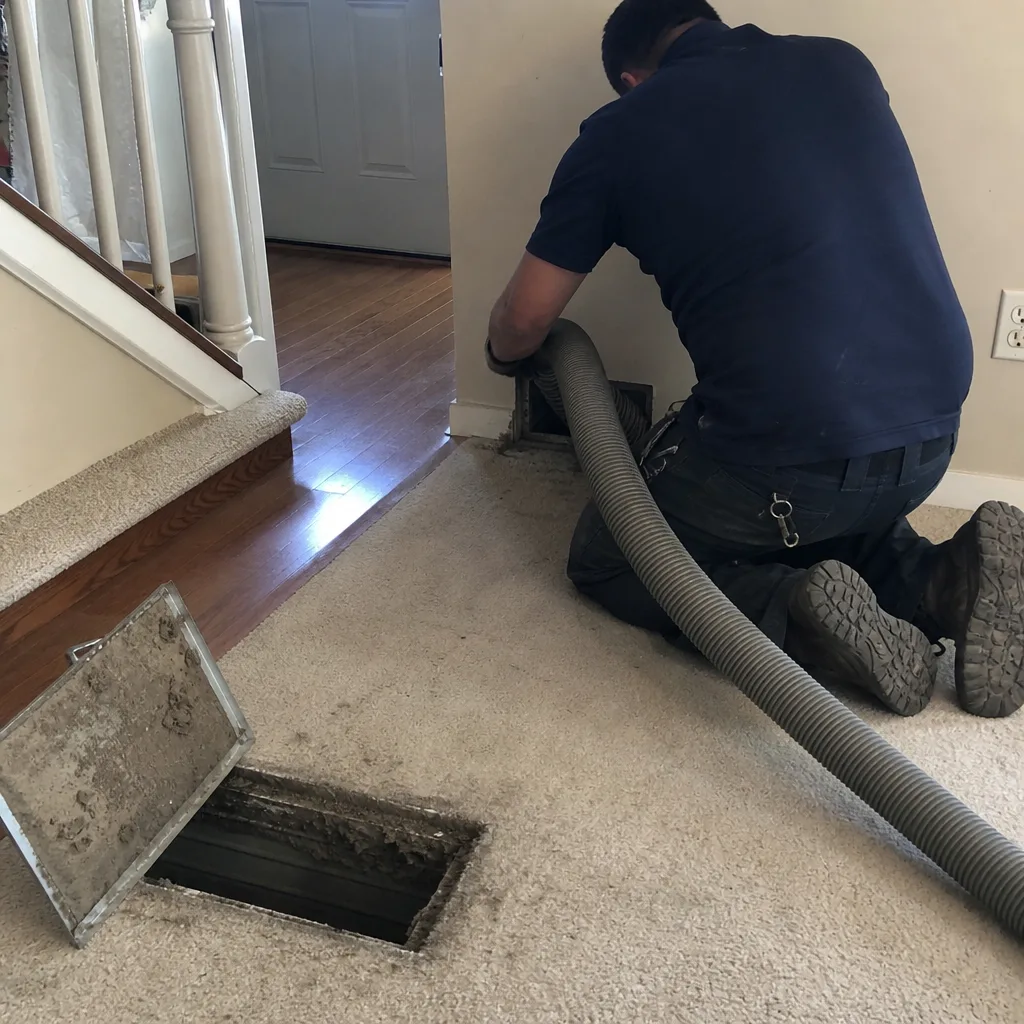
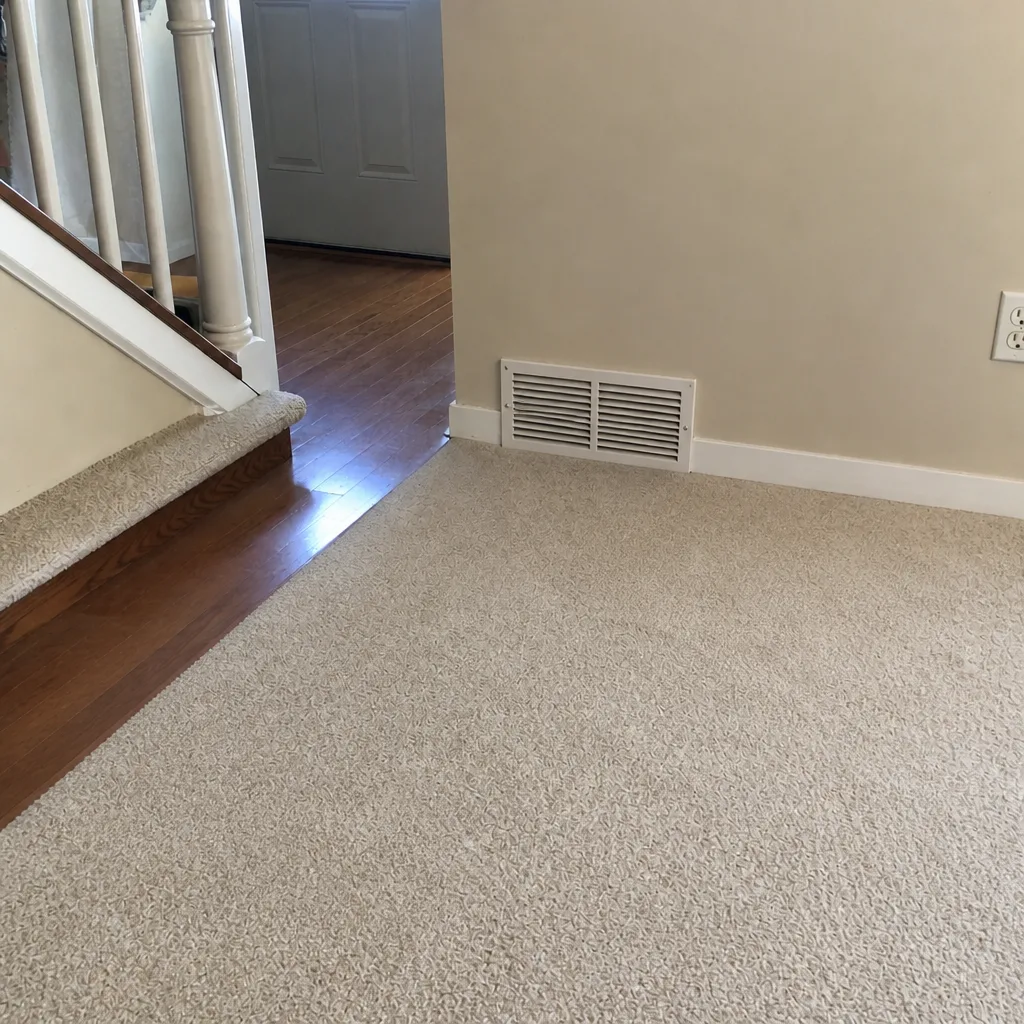
- Before-and-after photos of your ducts. Any reputable service can show you pictures of your own duct interior before and after cleaning. Not stock photos. Not someone else’s system. Yours. If a company can’t produce them, question what was actually done.
- Specific equipment. Ask what they use. If the answer is “a big vacuum,” ask what brand. Rotobrush and Nikro are the systems commercial contractors use for source removal. If a quote arrives without any equipment detail, it’s a fair question to ask.
- Full-system scope. A quote that covers only the ducts and not the visible HVAC components – coil, blower, air handler – isn’t a full cleaning. On a central system, those components collect what the ducts collect, and cleaning one without the other leaves the job half done. Ask whether air duct cleaning from that company includes the interior of the HVAC system, and if not, whether they can quote it in the same visit.
- Sanitizing capability. If your system shows any sign of microbial contamination, sanitizing needs to be part of the plan – not a surprise line item. Guardsman and Abatement Technologies sanitizing solutions are the professional-grade options. Ask about the plan upfront.
- Repair and sealing capability. If the technicians find duct leaks or disconnected runs during the job, can they address it or will they refer you elsewhere? A service that can clean, repair, seal, and sanitize the system end-to-end saves you a second call.
Common Mistakes to Avoid
- Assuming a hardware store kit equals a duct cleaning. It cleans the entry to each branch and nothing further. Consumer kits sell on the promise of full cleaning with the physics to back up maybe 10% of it. Go in knowing the gap.
- Brushing suspected mold colonies. Agitating a mold colony with a consumer brush spreads spores across the whole system. If you smell musty odor or see dark spotting, this is the wrong task to try at home.
- Running a rigid brush head into flex duct. West Jordan’s newer construction is flex-heavy, and the inner liner on those runs is thin. One tear and the run is done. Save the agonizing over the repair cost by not snaking a brush in.
- Ignoring the return grille. The return pulls the most air in the system and catches the most dust. Homeowners clean the supply registers and skip the return. That’s backwards. The return is doing most of the work and needs the most attention.
- Confusing dryer vent lint with general dust. Dryer vent lint is a fire risk and needs full-run removal – a shop vac from the appliance side doesn’t address lint packed in the middle of the run. If the exterior flapper shows poor airflow, get the run inspected properly.
- Choosing the cheapest coupon. In this trade, the lowest advertised price almost always means the scope was trimmed, then upcharged on site. A per-system flat quote, in writing, before work starts, protects you better than any coupon.
- Skipping the HVAC interior because the ducts are “clean.” The blower and coil collect dust too. If they aren’t cleaned, dust continues to circulate regardless of how clean the ducts are.
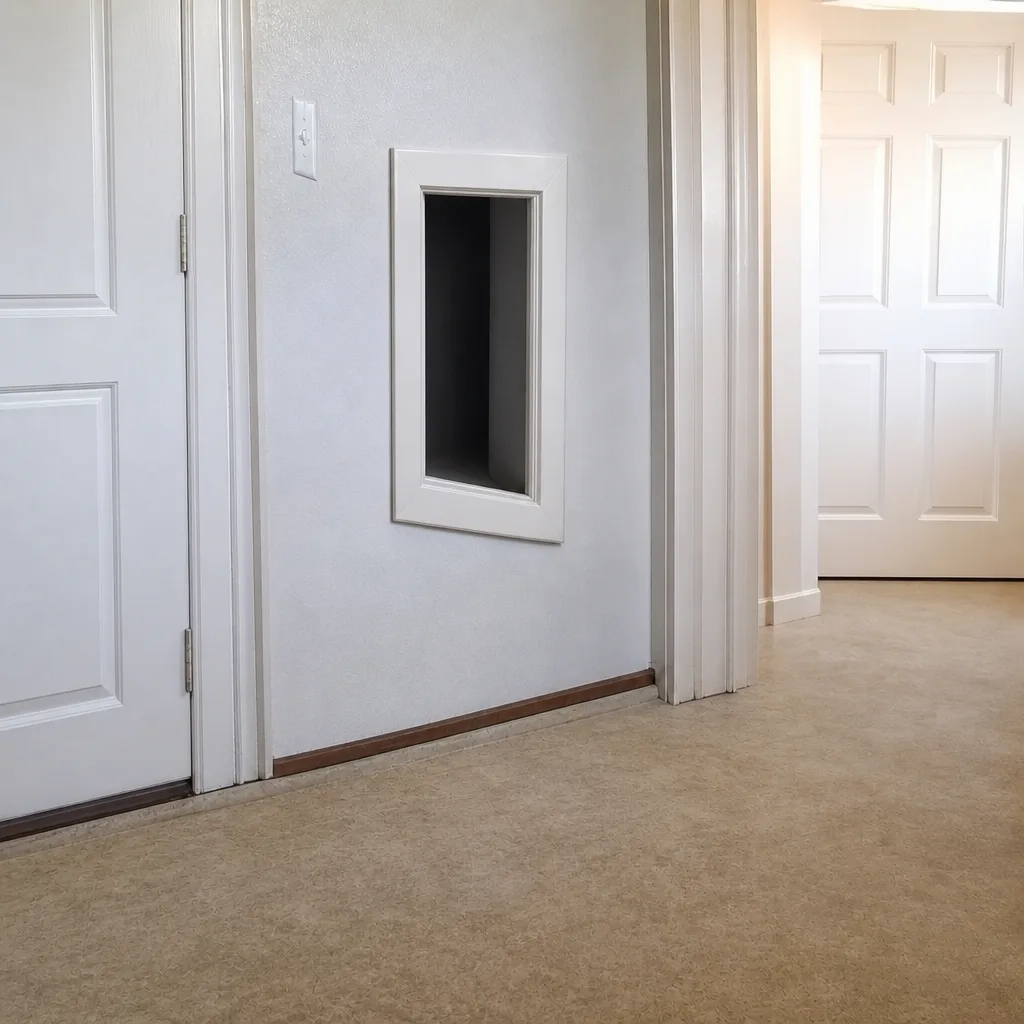
See the difference
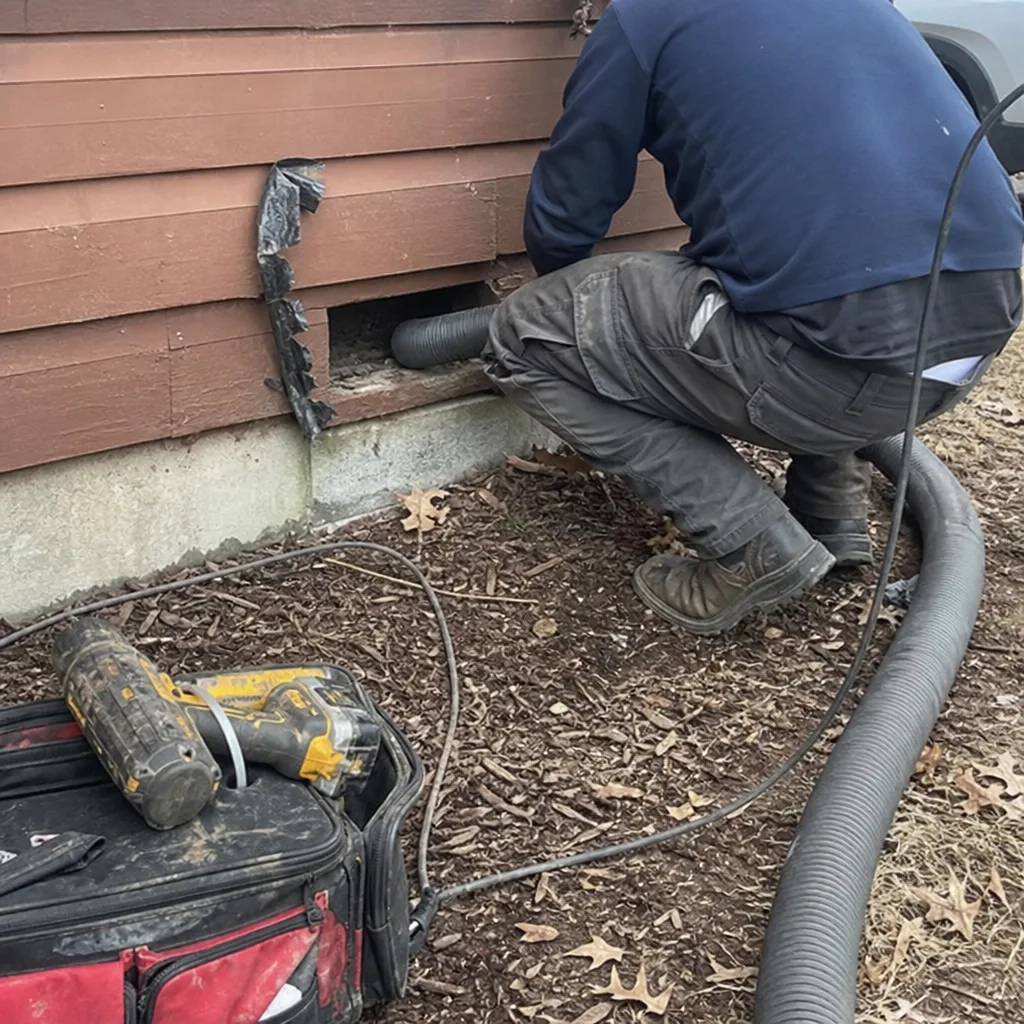 Before
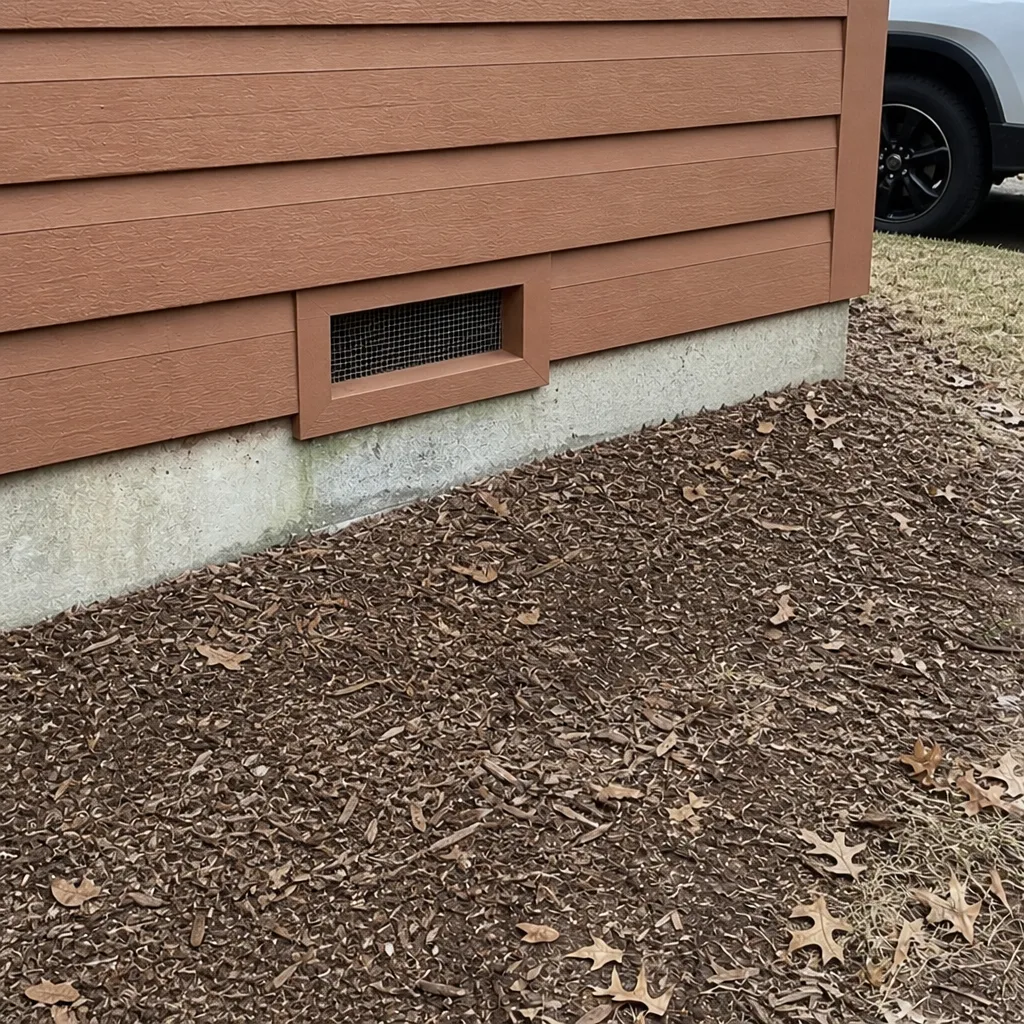 After
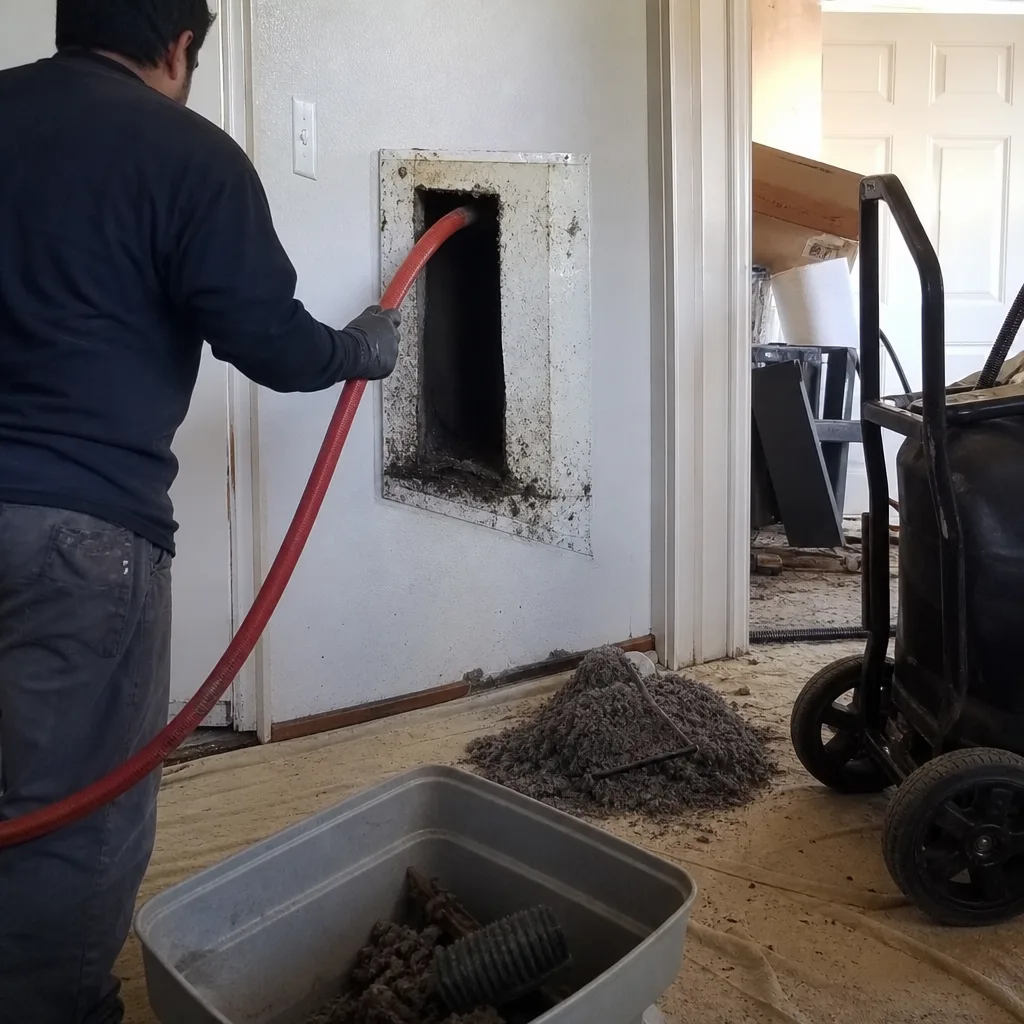 Before
 After
 Before
 After
When to Call a Professional
Call a professional if you see visible debris past the register boot, if the air smells musty when the HVAC starts, if anyone in the household is experiencing new or worsening allergy symptoms that correlate with the system running, if you’ve recently completed a renovation, if you have any reason to suspect vermin, if your dryer vent is packed with lint, or if the system hasn’t had professional service in five years or more. Those are the situations where the physics of the problem require equipment that a shop vac can’t replicate. West Jordan Air Duct Cleaning Pros offers free estimates in West Jordan – call (844) 713-5742. We answer 24/7, and dispatch runs 7am to 7pm, Sunday through Friday. Our technicians have up to 11 years of experience, work with Guardman and Abatement Technologies sanitizing solutions, and clean the ducts and the HVAC interior together so you don’t end up with a half-finished system.
Frequently Asked Questions
You can maintain the parts of the system that don’t require negative pressure – registers, return grilles, filter box, dryer vent inspection, and airflow observation. You can’t perform source-removal cleaning of the trunk and branch runs with consumer equipment, because a shop vac generates roughly 100 CFM while professional equipment generates 10,000 to 16,000 CFM. The difference isn’t volume, it’s whether the debris leaves the system or re-enters the room. Call (844) 713-5742 for an exact quote – estimates are free.
It varies by system size and accessibility, which is why a written estimate is the only number that matters. What matters more than the number is what’s included – a per-system flat quote covering duct cleaning plus the visible HVAC components is a different scope than a duct-only coupon. If you compare two quotes and one is dramatically cheaper, the scope was trimmed. Call (844) 713-5742 for an exact quote – estimates are free.
The cheap quote is usually a teaser price that becomes a bigger invoice on site once technicians “discover” add-ons. One flat price per system, agreed before work starts, is the pattern to look for. Anything that prices per vent, per room, or with a coupon is telling you the scope is going to change. Call (844) 713-5742 for an exact quote – estimates are free.
Ask for before-and-after photos of your own ducts, not stock images. A technician who can show you pictures of the interior of your duct run before and after cleaning has evidence. Anyone who can’t produce those photos might not have done the work described. Call (844) 713-5742 for an exact quote – estimates are free.
Every three to five years for most homes, sooner if you’ve renovated, have pets, suffer from allergies, or notice musty odor or uneven airflow. The dry valley climate accelerates fine dust settling, and winter inversions push more particulate through the system during heating season. Keep up the DIY upkeep between cycles and you’ll stretch the professional interval. Call (844) 713-5742 for an exact quote – estimates are free.
Yes, especially on flex duct. Rigid brush heads punctured through aging inner liners tear the run and it can’t be repaired – only replaced. On older West Jordan homes with flex branch runs from previous upgrades, that’s a real risk. Professional source-removal equipment uses rotary agitation with an external vacuum, which doesn’t rely on the duct holding up against a consumer brush. Call (844) 713-5742 for an exact quote – estimates are free.
The Bottom Line
DIY duct cleaning has a legitimate place, and it’s smaller than the marketing suggests. Registers, return grilles, filter maintenance, dryer vent inspection, and airflow monitoring – all worth doing, all achievable at home, all useful between professional cycles. Everything past the register boot is a different physical problem. The pressure differential required to evacuate settled debris from a trunk line can’t be produced by consumer equipment, and attempts to work around that limit risk mold spread, duct damage, or compacted debris jams. The honest decision tree is this: maintain what you can at home, and call in professional equipment for the source removal, the mold, the vermin, the post-renovation debris, and the neglected system. For the West Jordan homeowner, that’s the path that keeps the air in your home clean and the system in good repair.
If you’re ready for a professional assessment, call (844) 713-5742. We answer 24/7. Fast dispatch from 7am to 7pm, Sunday through Friday. Estimates are free, the price is set per job by the written estimate, and we’ll show you photos of your own ducts before and after. Visit West Jordan Air Duct Cleaning Pros to see what a clean-it, seal-it, verify-it approach looks like end to end.
Written by the team at West Jordan Air Duct Cleaning Pros.