
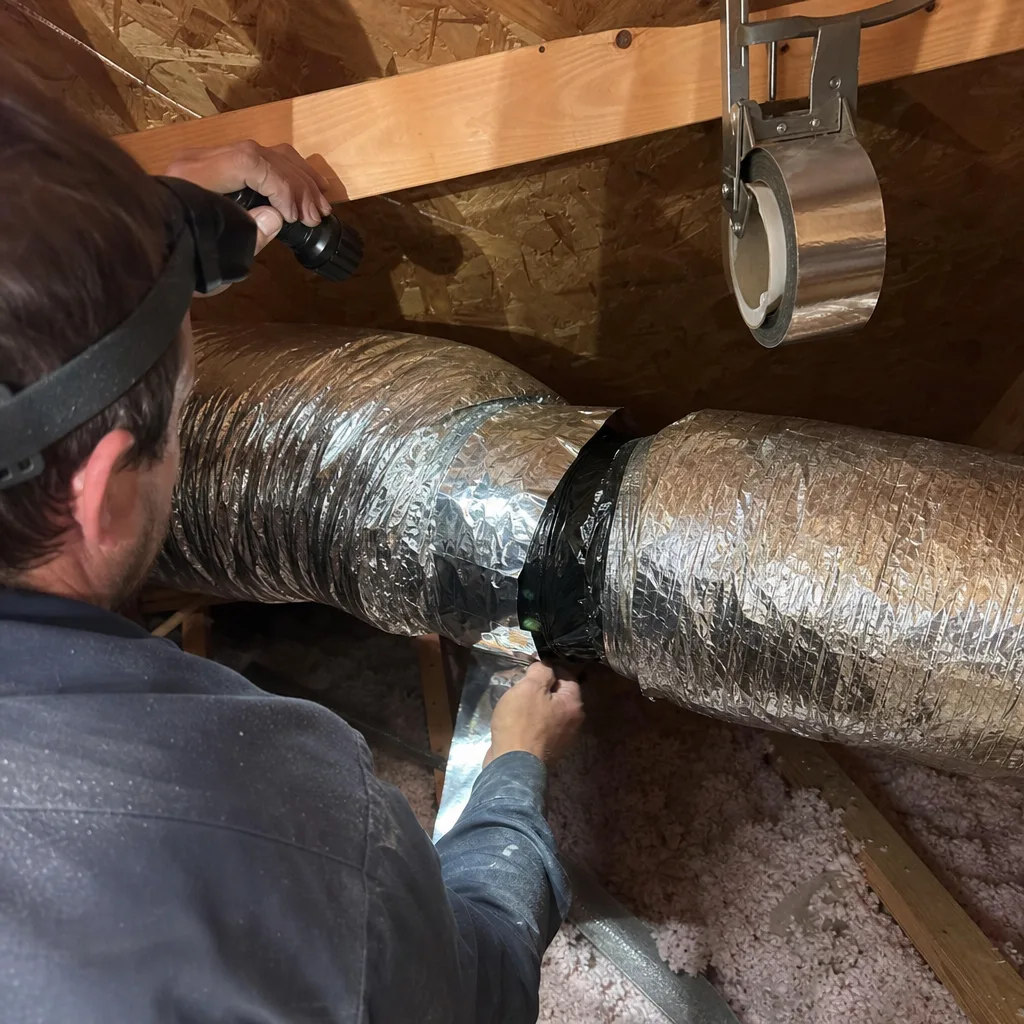
Last updated November 24, 2026
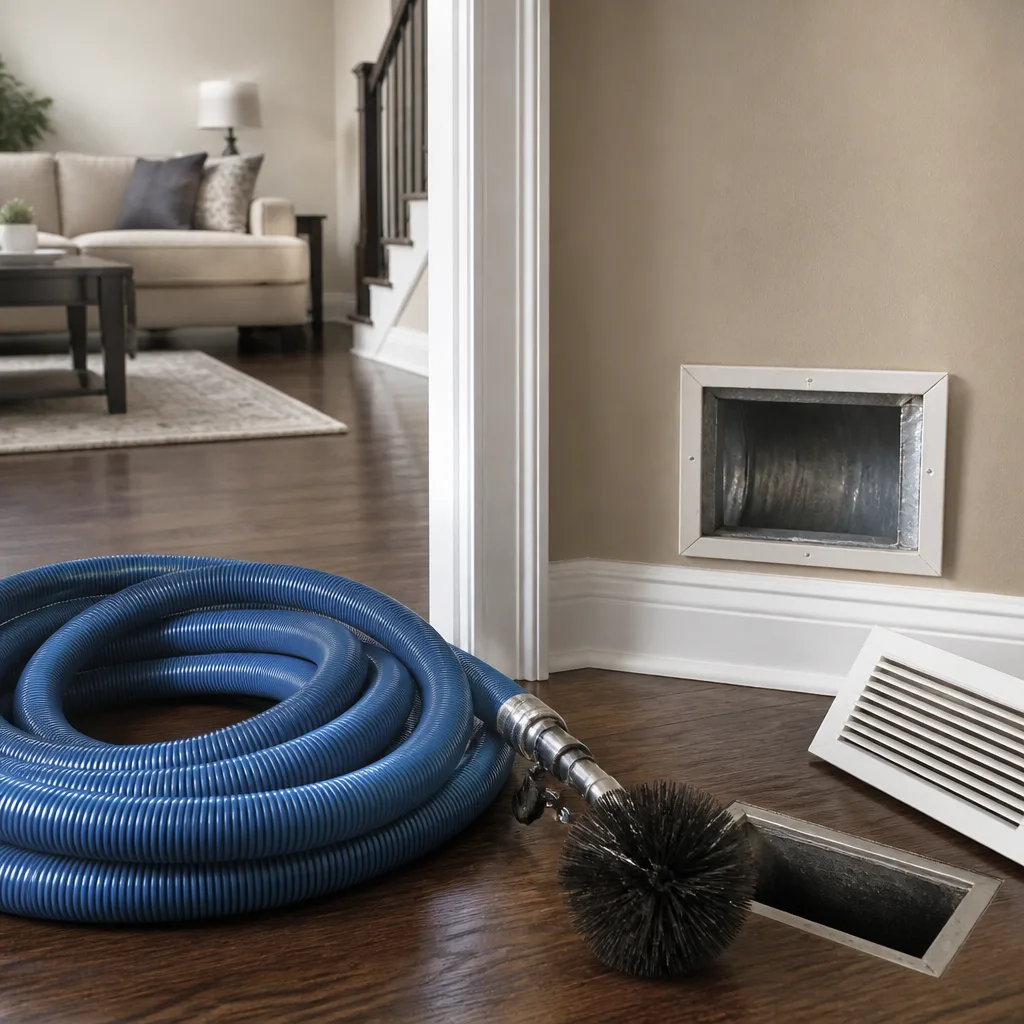 Whole-home duct cleaning
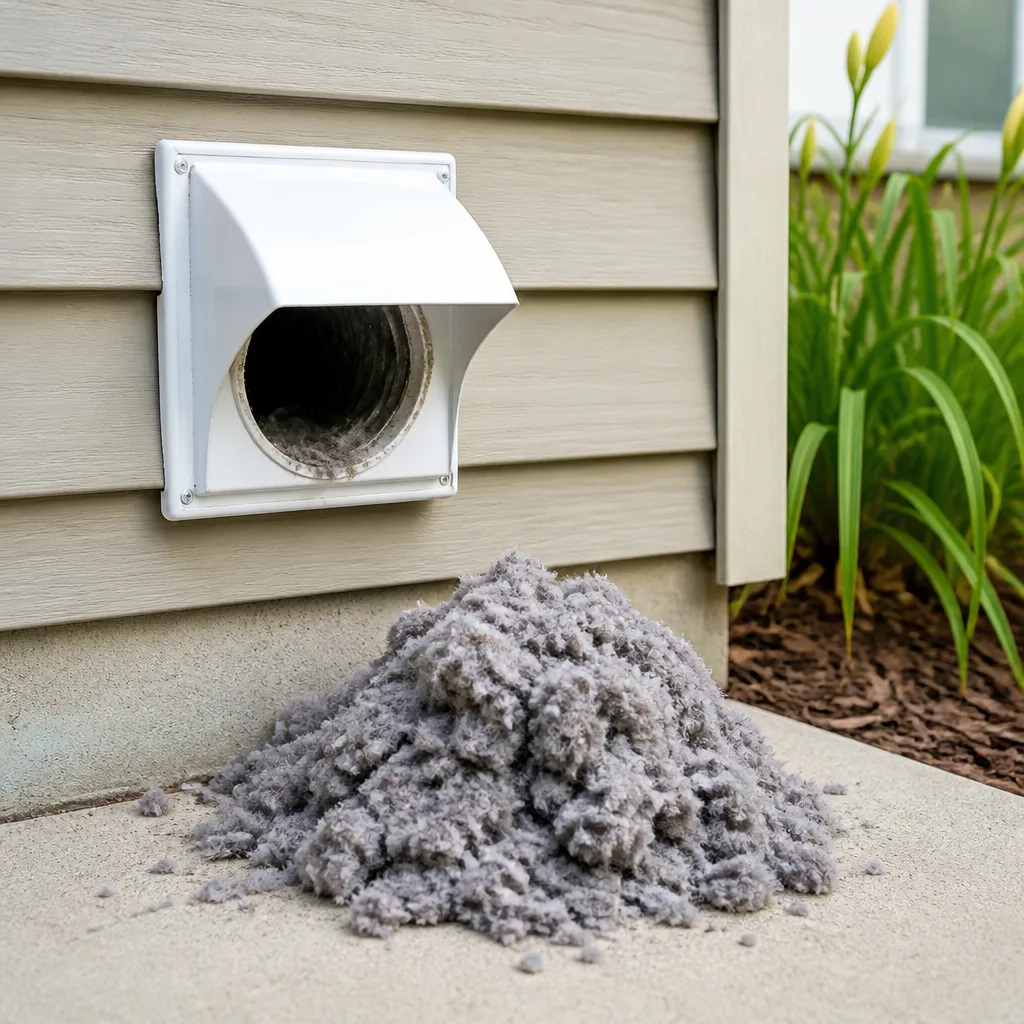 Dryer vent cleaning
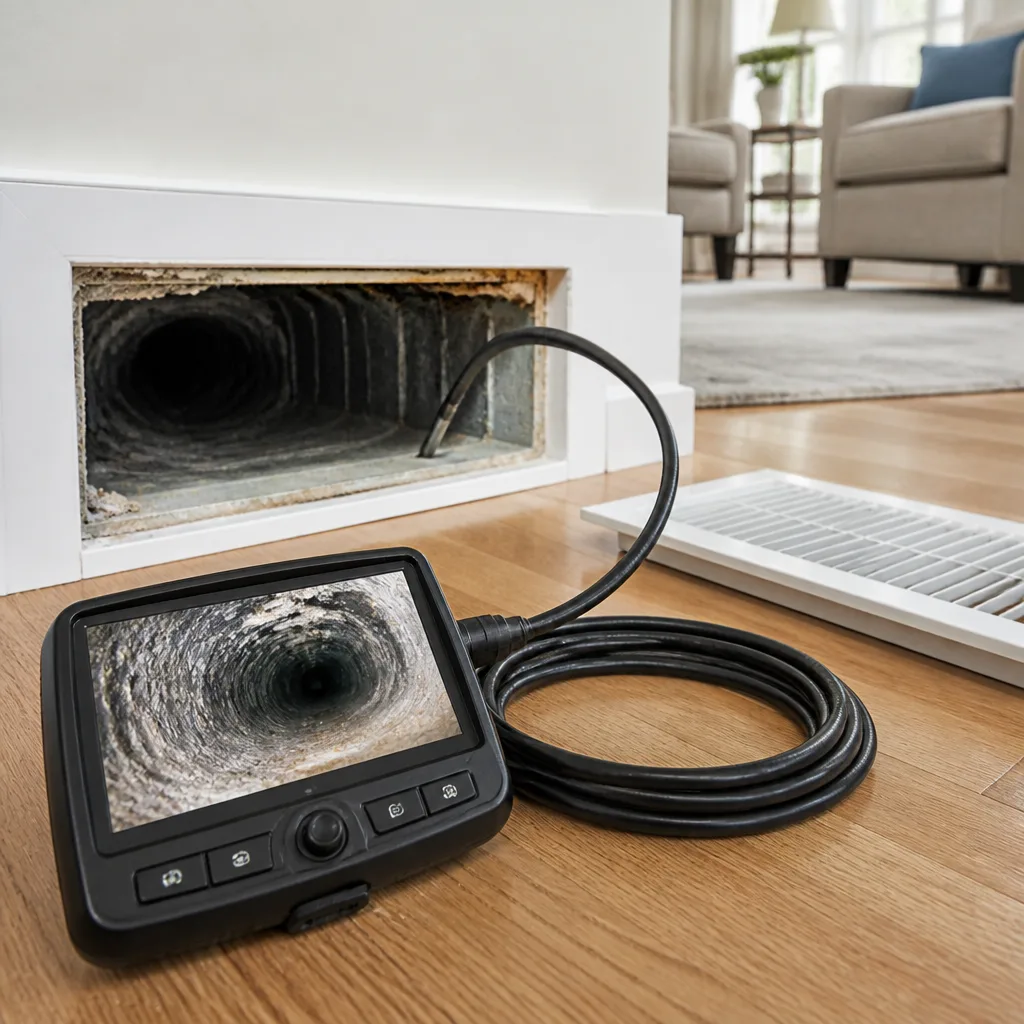 Camera inspection
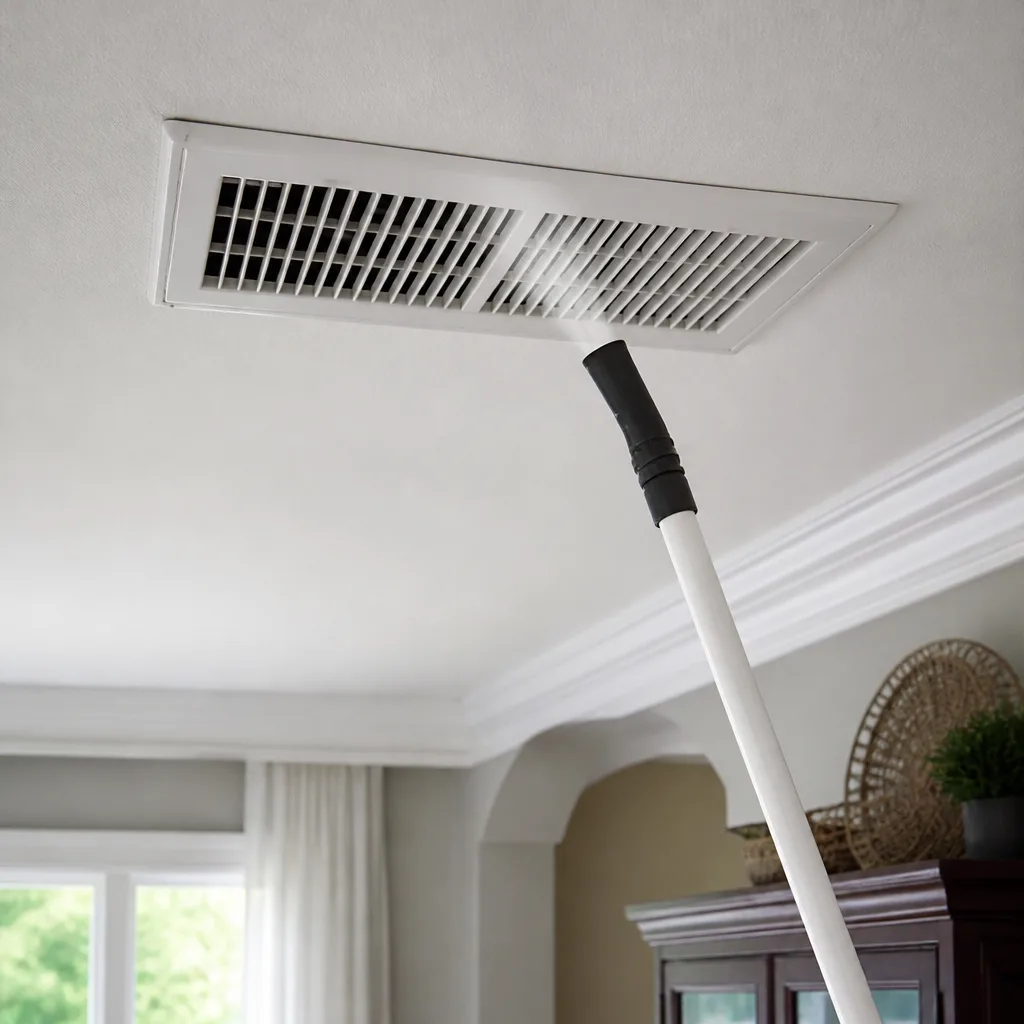 Sanitizing & deodorizing
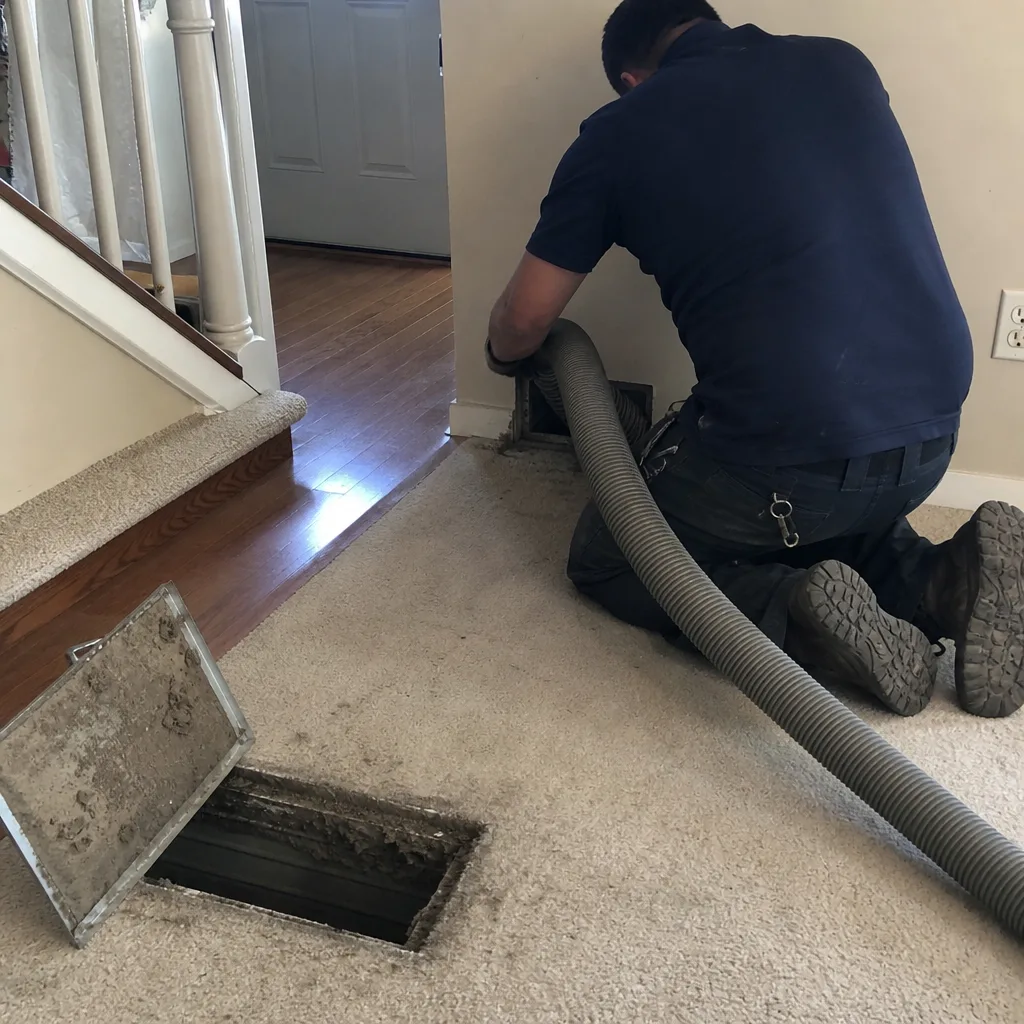
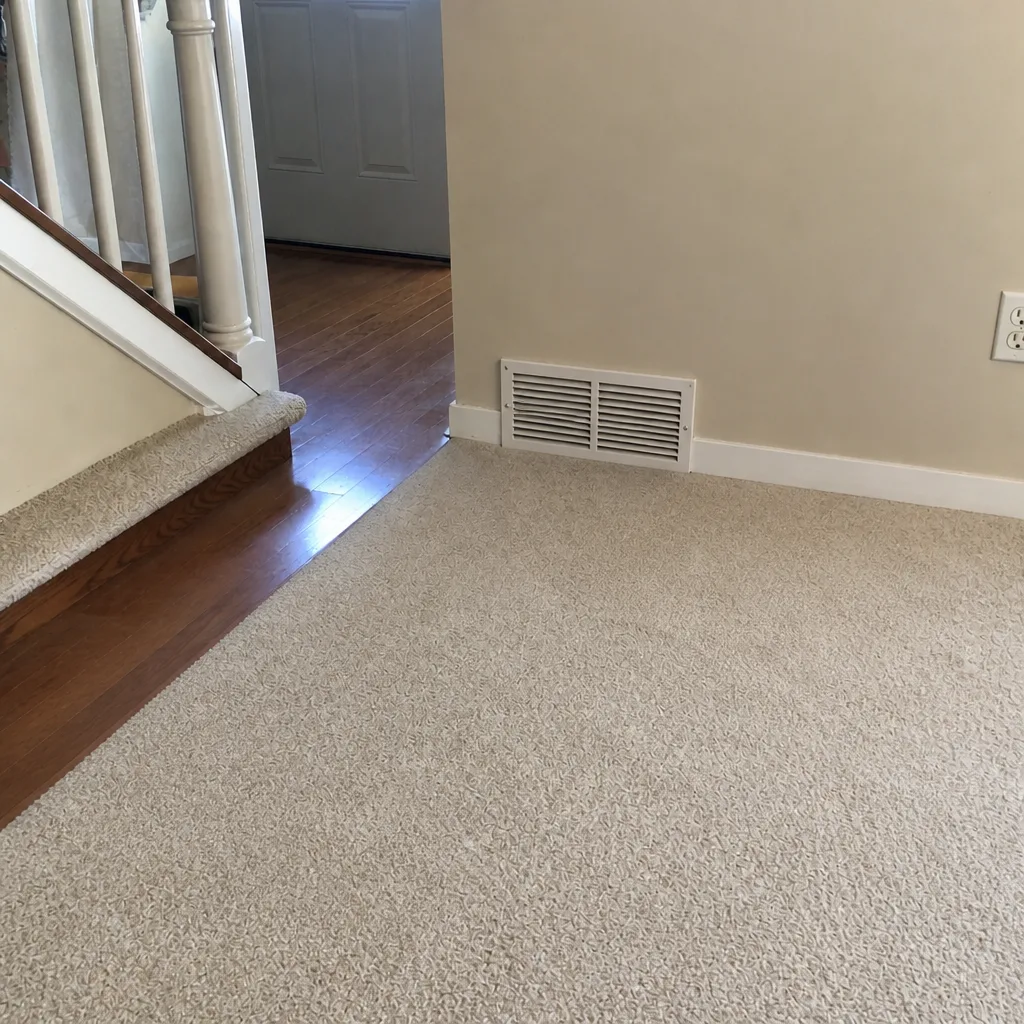
Whole-system duct and dryer vent check with before-and-after photos - you see exactly what came out of your vents
That "$99 whole-house special" is a bait ad - the real number appears once they are in your hallway, or the "clean" is a shop-vac at the register. We photograph the inside of your ducts before and after instead.
Air Duct Cleaning Warning Signs: A West Jordan Homeowner’s Reference Guide
A weak register is easy to dismiss. You turn the thermostat up two degrees, the room warms slowly, and life moves on. That habit is the problem. That single underperforming vent is telling you where a duct has collapsed, disconnected, or filled with debris, and adjusting the thermostat hides the message instead of reading it. Most homeowners in West Jordan notice this pattern for months before they call anyone. This guide covers the quiet, early-stage signals that show up long before the obvious ones, and gives you a framework for separating a duct problem from a furnace or filter problem. By the end you’ll know how to test your own registers, how to read your household smells, and what your home’s era of construction means for its ductwork.
Quick Answer
The main warning signs of contaminated or damaged ducts are uneven airflow between registers, musty or chemical odors that appear only when the HVAC runs, dust resettling on surfaces within a few days of cleaning, and allergy symptoms that ease when you leave the house. A single weak register usually points to a physical blockage or break in that branch line rather than a dirty system overall. If two or more of these signs show up together, it’s worth having the system inspected.
Styles & brands we work with
- Whole-home duct cleaning
- Dryer vent cleaning
- Camera inspection
- Sanitizing & deodorizing
Table of Contents
- The airflow differential test: a five-minute baseline
- Smell taxonomy: three odors, three different causes
- Why dust comes back in three to five days
- Symptom patterns: ducts vs. outdoor air vs. filtration
- Warning signs in West Jordan’s 1990s and 2000s homes
- Seasonal signals specific to the Salt Lake Valley
- When cleaning is enough and when repair comes first
The Airflow Differential Test: A Five-Minute Baseline
You can find a lot of duct problems with a tissue and ten minutes. The idea is to compare register against register instead of judging any single one on its own. A register that feels weak means little until you know what the others in your house are doing. When one vent is producing noticeably less than its neighbors, you have a differential, and a differential is a locating clue.
Here’s how to run the test:
- Set the thermostat to fan-only so the blower runs without heating or cooling. Let it run for a few minutes to stabilize.
- Hold a single-ply tissue or a lit incense stick about an inch from each supply register, one at a time. Note how strongly the tissue flutters or which way the smoke drifts.
- Write down the result for each room. A simple strong, medium, weak rating per register is enough.
- Check your return grilles the same way, holding the tissue against the grate to feel the pull inward.
- Compare the ratings. One or two weak supply registers while the rest are strong points to a problem in that branch line; weak airflow across every register usually points to the blower, coil, or main trunk instead.
What you’re looking for in the results: a supply register with almost no flow often means a flex duct that has collapsed or been crushed, a damper stuck closed, a joint that has come apart inside a wall or ceiling cavity, or a trunk line that was never properly sized. In West Jordan’s slab-on-grade and basement homes these blockages hide in the attic runs and behind finished soffits. If the tissue gets pulled toward a supply register instead of pushed away, that’s a backdraft condition and worth a professional look right away.
This baseline is also useful on its own for comparison later. If you run the same test after any duct work, you can see whether the differential actually closed. That’s more useful than a technician’s word about how the job went.
Smell Taxonomy: Three Odors, Three Different Causes
A smell is a diagnostic, not just a nuisance. Different odors point to different problems, and treating all of them as “musty ducts” leads to the wrong fix. The key question is timing: does the smell appear only when the system runs, or is it constant in a particular room?
- Musty, damp-earth, or wet-cardboard smells. These point to biological growth somewhere in the system. In a dry climate the moisture usually comes from a cooling coil that isn’t draining properly, a leaking condensate line, or humid summer air condensing on cold duct surfaces. Growth tends to cluster near the air handler and the first few feet of duct after the coil. Cleaning without fixing the moisture source just resets the clock.
- Burnt, hot-dust, or scorched smells. These mean debris is sitting on or near a heat source, often the heat exchanger, the blower motor housing, or the first run of duct off the furnace. This one deserves prompt attention. It can be a dust accumulation that burns off, or it can be a motor or heat exchanger problem that no amount of duct cleaning will fix.
- Chemical, plastic, or new-insulation smells. These often point to off-gassing from duct liner, insulation, or sealants, especially in homes where ductwork was installed or repaired relatively recently. New flex duct has a distinct smell for a while after installation. A chemical smell that develops suddenly in an older system can indicate overheating materials, and should be checked rather than aired out.
The timing pattern narrows things further. A smell that appears the moment the fan starts and fades within a few minutes is coming from inside the air path. A smell that’s strongest in one room and doesn’t change with the system is often a room-level moisture or material problem. A smell you notice on hot afternoons in August but never in winter is a cooling-side issue, likely the coil or its drain pan.
When we inspect a West Jordan home, we ask which room you smell it in first and whether the smell follows the thermostat. Those two answers usually point to the right part of the system before anyone opens a register.
Why Dust Comes Back in Three to Five Days
Dust settling back onto furniture within a few days of a thorough cleaning is a system warning sign, not a housekeeping one. If the dust load in your home reset and then returned to the same level in under a week, the source was never the ducts themselves. Something is still introducing material into the air stream.
Here’s what’s usually behind it:
- A compromised return duct. Return ducts run under negative pressure, meaning the system is pulling air through them. Any gap, disconnected joint, or crushed section turns that return into a vacuum that draws attic or crawlspace air, insulation fibers, and dust straight into the system. This is the most common reason cleaning doesn’t hold.
- A filter that’s undersized or the wrong MERV for the blower. A high-MERV filter on a blower that wasn’t designed for the pressure drop can cause air to bypass the filter entirely, pulling unfiltered air past the edges.
- Leaks at the air handler cabinet. The seam where the return plenum meets the furnace is a frequent gap point. Air drawn in there never sees the filter.
- An unsealed attic or crawlspace path. Any return box that’s open to unconditioned space is a dust pump.
This is why sealing matters as much as cleaning. A system that gets cleaned but not sealed just re-contaminates. We work with duct repair and sealing as part of the same service line for that reason, and it’s why our HVAC cleaning covers the cabinet and coil area rather than only the duct runs.
One way to confirm a return-side leak: look for dust streaks or a gray film on the ceiling or wall around a return grille, or on insulation near a duct joint in the attic. Streaks along a seam are usually pulled-in air carrying dust that deposits as it slows. On a West Jordan home with ductwork in the attic, that’s a visual diagnosis you can make with a flashlight on a cool morning.
Symptom Patterns: Ducts vs. Outdoor Air vs. Filtration
Coughing, sneezing, and itchy eyes aren’t automatically a duct problem. They’re the symptom that pulls people toward a duct cleaning service, so it’s worth separating three likely causes before spending money on the wrong one.
Here’s the pattern test we use:
- Location of relief. If symptoms ease noticeably within an hour of leaving the house and return within an hour of getting home, indoor air is the likely contributor. If symptoms follow you outside and into the car, outdoor air is the likelier driver.
- Timing against the thermostat. If symptoms flare in the ten minutes after the HVAC starts, the problem is on the air path. If they’re steady regardless of the system, source may be a room-level issue like a mattress, carpet, or pet dander.
- Seasonal pattern. Spring allergy flares in the Salt Lake Valley line up with outdoor pollen, not ducts. Winter flares in a tightly closed home point toward filtration and ventilation instead.
- Filter history. A filter that loads heavily in two weeks and a filter that’s still clean after a month tell you different things. Heavy loading means a lot of material is reaching the filter. A filter that stays pristine may not be intercepting air at all because of bypass.
Our technicians have up to 11 years of experience and have walked through this list with plenty of West Jordan households. When the pattern points to the air path, we look at return duct integrity and filter housing fit first, because that’s where the fix actually lives.
Filtration is worth a specific mention here. We work with Aprilaire filtration products, and the difference between a properly fitted media cabinet and a cheap filter jammed into an undersized slot shows up directly in the loaded-filter test above. If your filter box was installed for a one-inch filter in a home built in the late 1990s, that’s a design constraint you may want to address.
Warning Signs in West Jordan’s 1990s and 2000s Homes
A large share of West Jordan’s housing stock went up during a construction boom in the 1990s and 2000s. That era has a specific set of duct issues that show up across most of the homes we see from that vintage. If your home is from roughly that window, these are the signs to watch.
- Builder-grade flex duct sagging between hangers. Flex duct needs support every few feet. When the hangers were set too far apart, the duct sags, and a sag becomes a low point that collects dust and restricts flow. Severe sagging can collapse the inner liner entirely.
- Joint failures at the mastic. Mastic is the paste that seals duct joints. In a dry climate it dries, cracks, and pulls away over time. Every failed mastic joint is a leak, and on the return side that’s a dust intake.
- Undersized filter cabinets for the system. A builder-installed one-inch filter slot on a blower designed for a larger media filter forces a choice between airflow and filtration. Many homeowners install a restrictive filter to catch more dust, then wonder why airflow has dropped.
- Flex runs crushed behind drywall or in tight chases. When a duct run was pushed through a tight space during framing, the inner liner can be flattened. The register at the end of a crushed run is technically connected but delivering a fraction of its design airflow.
- Duct seal tape that has failed. Standard cloth-backed duct tape (not mastic) dries out and peels after years of heating cycles. It looks fine until you touch it.
None of these are defects in workmanship you can blame a specific builder for. They’re just what happens to standard residential ductwork after two to three decades of thermal cycling in this climate. A thorough inspection on a home from that era is worth doing even without a smell or a symptom, because these issues are visible when you’re looking for them and invisible when you’re not.
Our air duct cleaning service includes a look at the branch runs for sagging and collapse, because the cleaning alone won’t fix a crushed run. Rotobrush rotary brush equipment gets the liner clean; sealing and repair get it working right.
Seasonal Signals Specific to the Salt Lake Valley
The Salt Lake Valley climate makes some duct problems show up in patterns you won’t see in a coastal or humid-climate home. Knowing the seasonal ones keeps you from reacting to the wrong signal.
Winter. Cold, dry air plus a closed house concentrates everything. Dust settles quickly, and static cling makes it stick to walls. A winter flare in dust on surfaces is a sign your return side is pulling air it shouldn’t. Also watch for condensation on registers in rooms where a humidifier is running; the moisture can feed growth in the duct run nearest that room.
Summer. Long, hot days mean the cooling coil runs hard and stays wet much of the day. A coil that doesn’t fully drain feeds a musty smell directly into the supply duct. If the musty smell shows up only in July and August and fades in September, the coil and drain pan are the first place to look.
Spring. Cottonwood and juniper pollen blow through the valley. Homes with return leaks pull that pollen straight into the system instead of letting the filter catch it. If your filter isn’t loading during spring pollen season, that’s a sign return air is bypassing the filter entirely.
Fall. The first heating cycle of the season usually brings a burnt-dust smell. Some of that is normal burn-off on the heat exchanger. A smell that persists past the first week of the heating season is not normal and deserves a look at the blower compartment and the duct nearest the furnace.
Whatever season the signal shows up in, the ranking order is the same: return-side integrity, then filter housing fit, then duct cleanliness.
When Cleaning Is Enough and When Repair Comes First
Cleaning fixes a dirty system. It doesn’t fix a broken one. The most expensive mistake in this trade is paying for a cleaning on a system that needed repair, then paying again for the repair and a second cleaning. Here’s the order that avoids that.
Cleaning alone is usually enough when:
- All registers are flowing within a reasonable range of each other.
- The only smell is a general musty “old house” smell with no timing pattern against the thermostat.
- Filter loading is steady and the filter is catching material.
- The ducts are intact and sealed, and the last cleaning was more than a few years ago.
Repair comes first when:
- A differential test shows one or two registers dramatically weaker than the rest.
- There’s visible dust streaking at duct joints or around return grilles.
- The burnt or chemical smell categories above are present.
- Dust returns to surfaces within days of a cleaning.
- Flex duct is visibly sagging or crushed in accessible areas.
Our full-system approach is clean it, seal it, verify it. We use Nikro negative-pressure equipment to pull dust out of the system while we work, Rotobrush rotary brushes to agitate the duct walls, and then we repair and seal the leaks before verifying airflow. Sanitizing with Guardsman or Abatement Technologies solutions is offered when biological growth is a factor; it goes on after the cleaning, not in place of it. We work with Honeywell and Abatement Technologies air-treatment products as part of the same system view, because air quality is a filtration and ventilation question too.
If you’re already thinking about the ducts, the dryer vent cleaning service covers the other air path in your home. Lint buildup is a recognized fire risk, and many homeowners have never had theirs checked. It fits naturally into the same visit.
Common Mistakes to Avoid
- Adjusting the thermostat to compensate for a weak register. This treats the symptom, not the cause, and leaves a crushed or disconnected run untouched. Run the airflow differential test instead and write down what you find.
- Choosing a cleaning company on price alone. Duct cleaning equipment quality varies enormously. A shop-vac setup can’t reach the full length of a duct run or pull debris against negative pressure. Ask what equipment is used and whether repair and sealing are offered.
- Cleaning without sealing. A cleaned, unsealed system in a West Jordan home with attic ductwork will re-contaminate from a compromised return within weeks. Repair the leaks first or in the same visit.
- Ignoring the filter housing fit. A high-MERV filter jammed into a one-inch slot too small for it does nothing but restrict airflow. Check that the filter actually seals at its edges.
- Treating all smells as “musty ducts.” A burnt smell and a chemical smell point to different problems. Air fresheners and air purifiers hide the signal without addressing it.
- Assuming new construction means clean ducts. Builder-era ductwork that’s two decades old is exactly the vintage most likely to have failing mastic and sagging flex runs. Age matters, not the fact of recent construction.
- Skipping the dryer vent. The vent run behind the dryer is a separate contamination and fire concern. Treat it as part of the same indoor air picture.
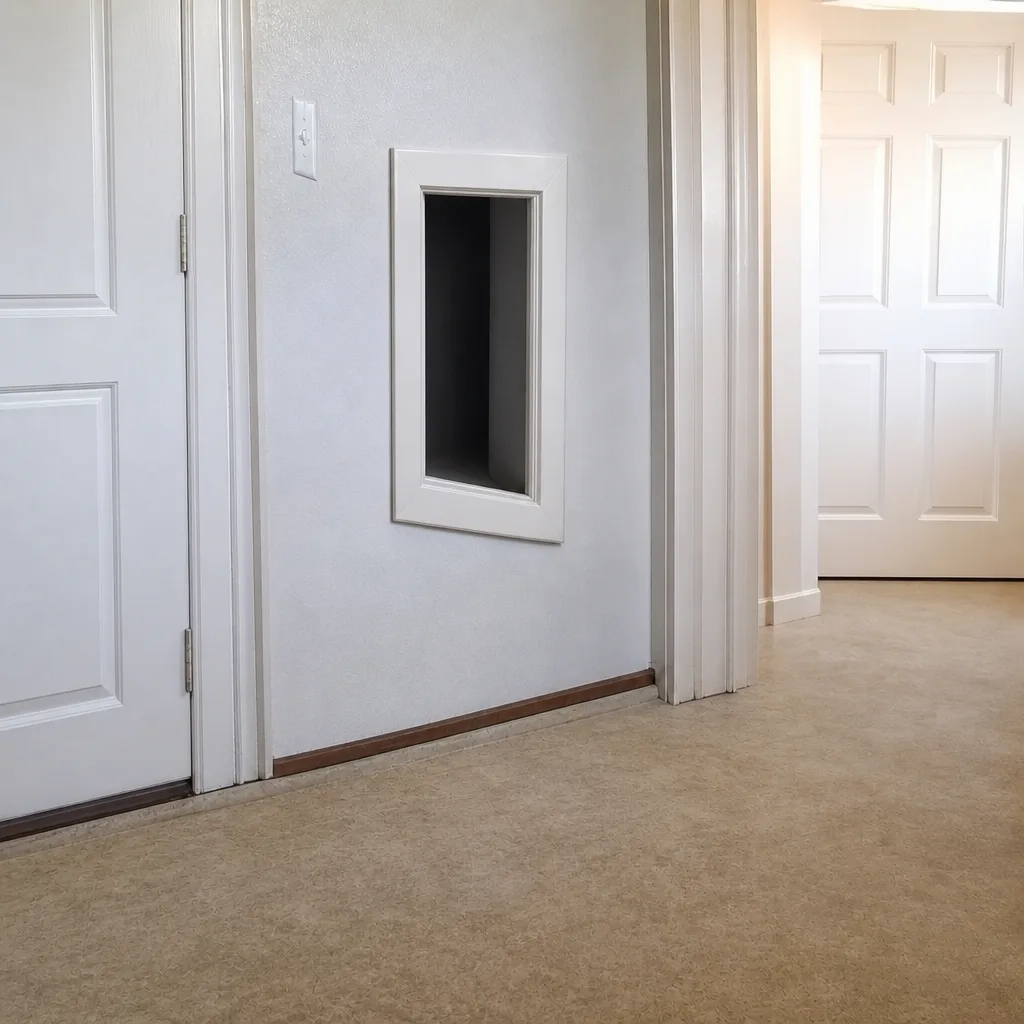
See the difference
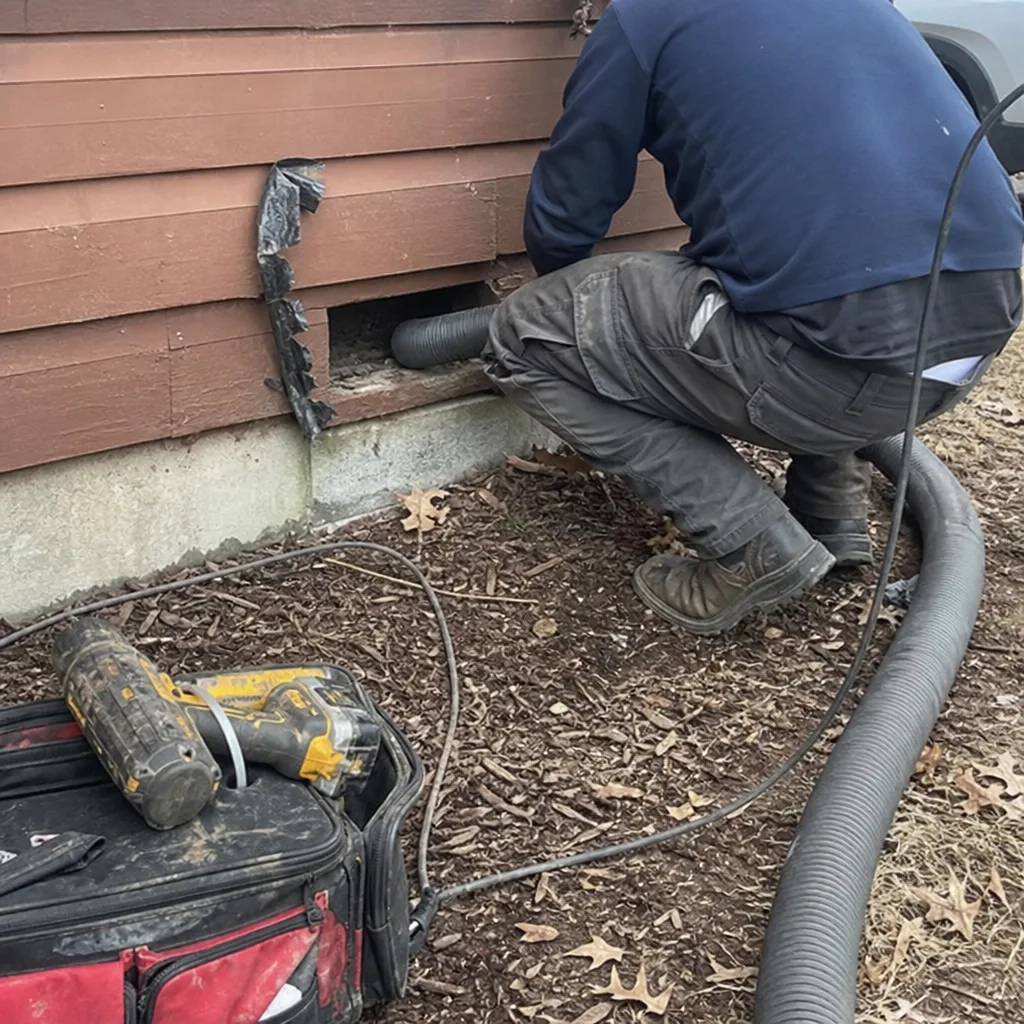 Before
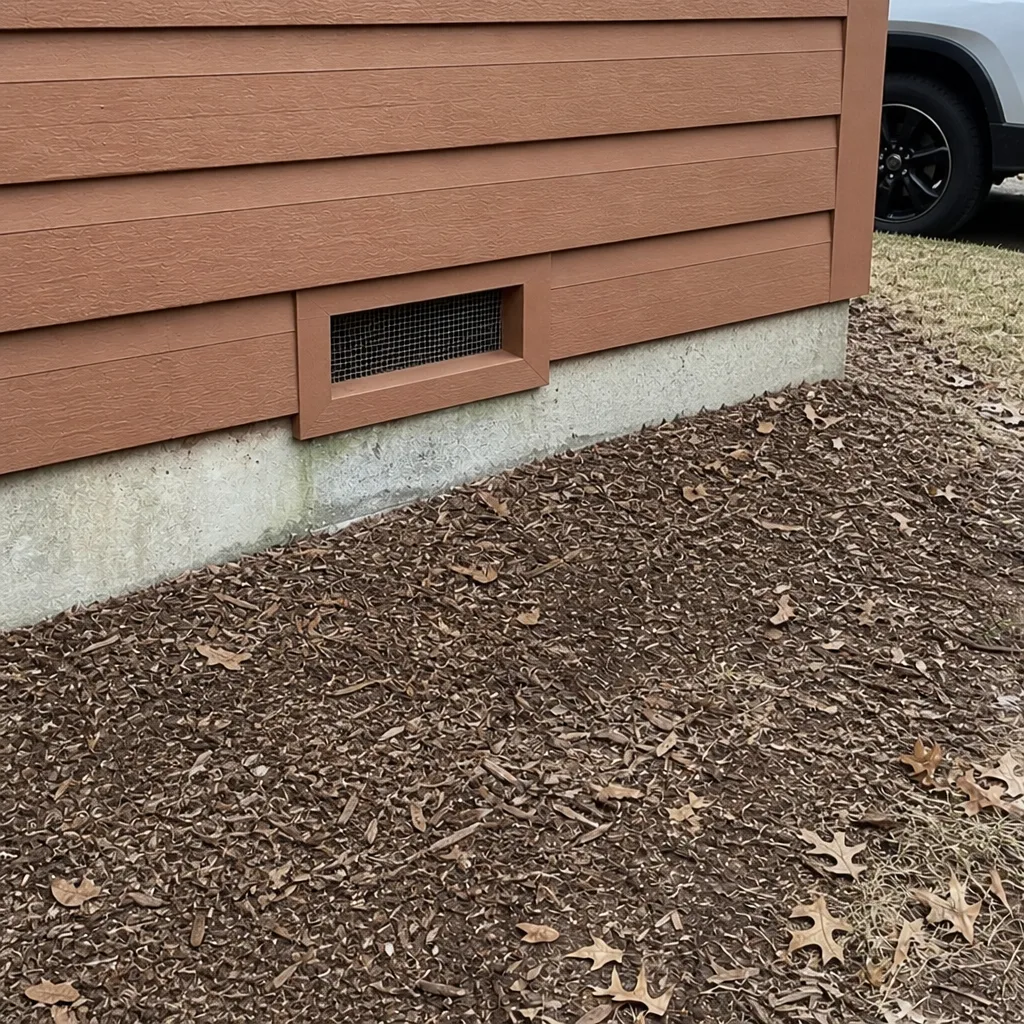 After
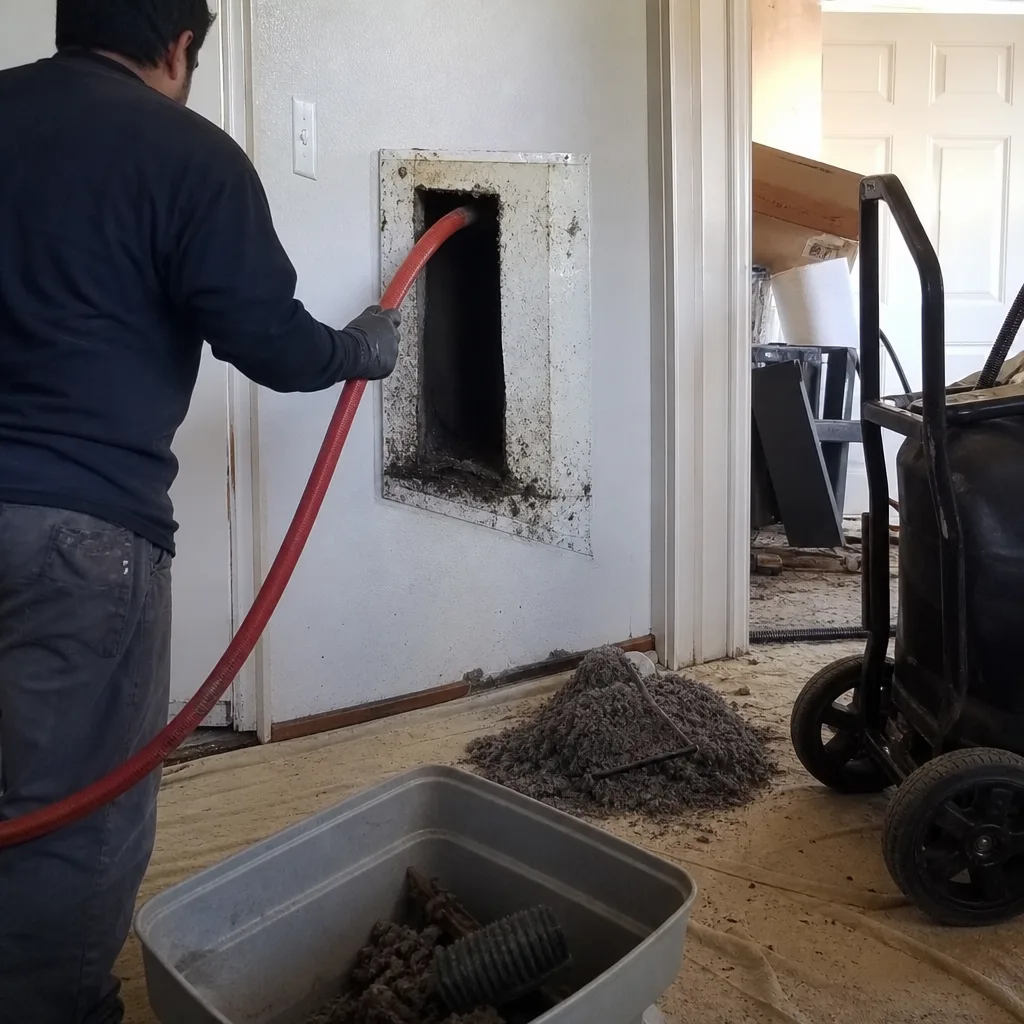 Before
 After
 Before
 After
When to Call a Professional
Call us when two or more of the signs in this guide show up together, or when any single sign is severe. A weak register that never recovers, dust that returns in days, a smell that follows the thermostat, symptom relief every time someone leaves the house, or visible streaking along duct joints all justify a professional look. If your home was built during West Jordan’s 1990s or 2000s construction boom and has never had the ductwork inspected, an inspection is worth scheduling even without symptoms.
West Jordan Air Duct Cleaning Pros offers free estimates in West Jordan. Call (844) 713-5742. We answer 24/7. Fast dispatch from 7am to 7pm, Sunday through Friday. One flat price per system is agreed before work starts, before-and-after photos are taken of your own system, and the local pro we connect you with is licensed and insured as their state requires.
Frequently Asked Questions
Uneven airflow between registers is usually the first sign. A single register that blows noticeably weaker than its neighbors points to a problem in that branch line, such as a collapsed flex duct, a failed joint, or a stuck damper. Run the tissue or incense test on each register to find out.
If all registers flow within a similar range and the system is just dirty or musty, cleaning usually resolves it. If one or two registers are dramatically weaker, if dust returns within days of cleaning, or if there’s visible streaking at duct joints, repair and sealing come first. Call (844) 713-5742 for an inspection.
Return duct leaks are the most common reason. Return ducts run under negative pressure, so any gap pulls attic or crawlspace dust directly into the air stream. Undersized filter boxes and unsealed air handler cabinets cause the same effect. Fixing the leaks is what keeps a cleaning from being undone.
No. Musty smells can come from the cooling coil, its drain pan, or a room-level moisture issue. Check the timing: a musty smell that appears when the HVAC starts points into the air path, especially the coil and the first run of duct. A smell that’s constant in one room without the system running points elsewhere.
Look for sagging flex duct in accessible attic runs, cracked mastic at duct joints, and a filter cabinet sized for a one-inch filter that may be restricting airflow. These are the most common findings in homes from that construction era. An inspection is worth doing whether or not you notice symptoms.
Yes. The dryer vent is a separate air path and a recognized fire-prevention concern. Lint buildup in the vent run restricts airflow and creates a hazard. Many homeowners have never had theirs inspected. It’s a natural companion to ductwork service.
The Bottom Line
The warning signs that matter most are the quiet ones: a single weak register, a smell that follows the thermostat, dust that resettles within days of cleaning, and symptoms that ease when you leave home. Each of those points to a specific part of the system rather than a general “dirty ducts” problem. Homes built in West Jordan during the 1990s and 2000s have their own predictable set of issues in flex duct sagging, failing mastic, and undersized filter boxes. The diagnostic order that saves money is return-side integrity first, filter housing fit next, cleaning last. Professional-grade equipment from Rotobrush and Nikro is what makes a full end-to-end cleaning possible. Call (844) 713-5742 to schedule a free estimate. We answer 24/7. Fast dispatch from 7am to 7pm, Sunday through Friday. Learn more about West Jordan Air Duct Cleaning Pros and the full range of services we connect you with.
Written by the team at West Jordan Air Duct Cleaning Pros.